
Headset Theory
Life is Like a Video Game

My regular readers know that I’ve been working on a book. My essays here have largely been a way for me to experiment and work out how to present a synthesis of Eastern spiritual insights and Western scientific insights. I’ve decided to start publishing my first draft, in serial form, starting with the introduction.
Introduction
“It is so utterly simple that trying to communicate through words through a hopeless quagmire of complicated sounding ideas.”
- Ramana Maharshi
All of the world’s spiritual teachings are pointing to that which is beyond all concepts, using concepts, which can both reveal and obscure That which they are pointing to.
Even Buddha, after his awakening, doubted that anyone would be able to comprehend something so subtle, so simple, and so intimate, that most of us look past it. Eventually Brahman, God, convinced Buddha that he would be able to reach some, and he decided to teach.
The modern world is drenched in concepts, much more so than in Buddha’s age, and the theory I’m about to present is an attempt to use some of these concepts, particularly those revealed by Western science, to point to That which is beyond all concepts. In the Diamond Sutra, Buddha describes experience like this:
So you should view this fleeting world:“A star at dawn, a bubble in a stream,
A flash of lightning in a summer cloud,
A flickering lamp, a phantom, and a dream.”
— Diamond Sutra
Of all these metaphors, the dream is perhaps most appropriate. In our time it has become popular to describe our world as a simulation, which is a sort of digital dream. Today, perhaps Buddha would say something like this:
So you should view this fleeting world:
A hologram in space, a film on a screen,
A code-rendered world within a simulation,
A fleeting frame in a video game,
A passing scene in virtual reality,
A glitch of light, a tweet, and a meme.
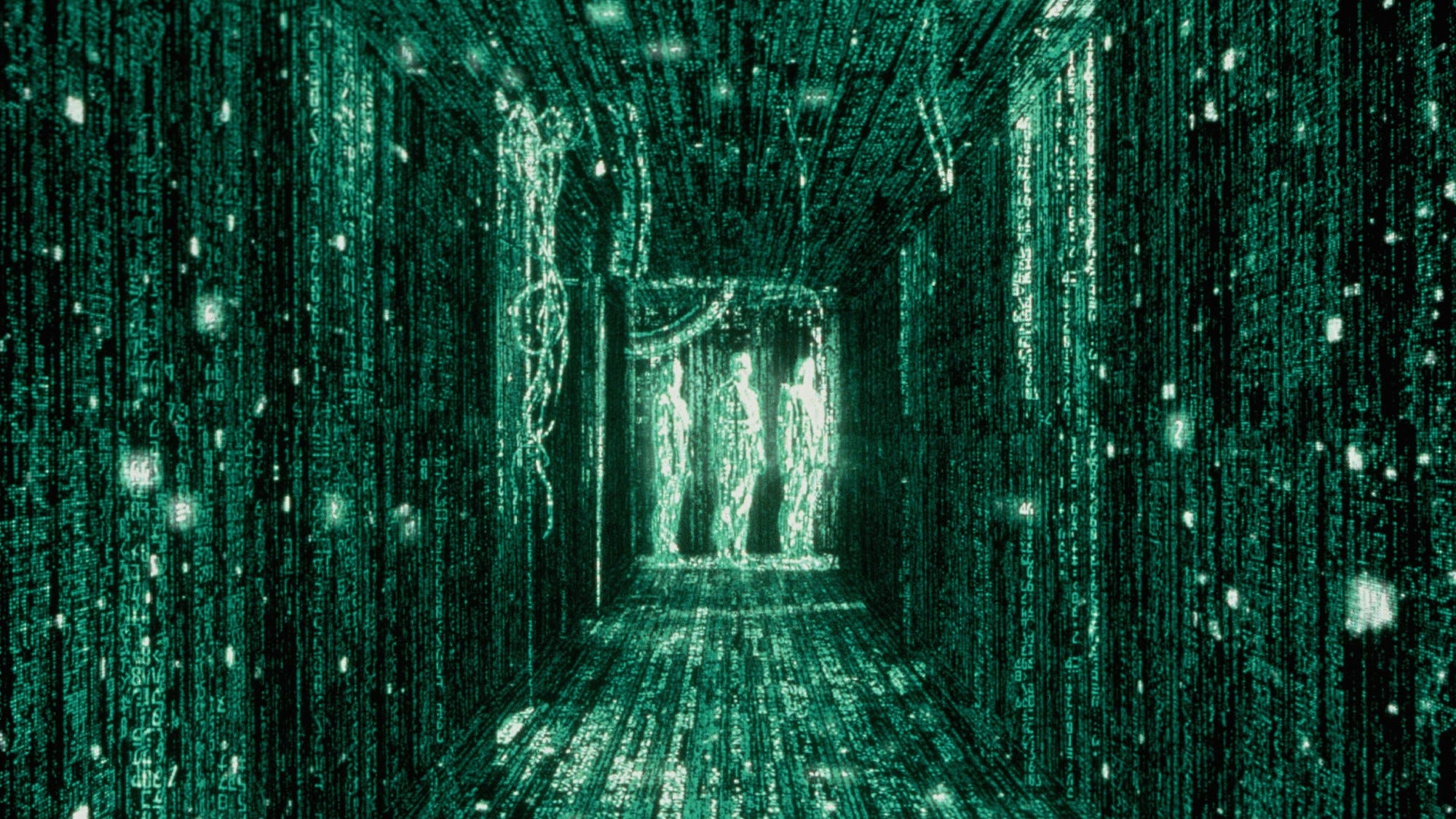
We live in a world where Western science and its attendant concepts thoroughly permeate the collective mindstream. Insofar as we buy into the materialist view, scientific concepts, like all concepts, can and do serve to increase suffering, freezing the dynamic, effervescent experience, which we call the world, into something seemingly solid and concrete.
Materialism has not yet caught up to Western scientific insights of quantum physics, more than one hundred years old now, which reveal, much like the Eastern spiritual traditions, that everything is empty.
"Everything we call real is made of things that cannot be regarded as real.”
- Niels Bohr
Insofar as we can use scientific understanding and concepts to free ourselves from concepts, and thus live freely, science can be very useful, and very liberating.
Scientific insights into the hemispheres can be very helpful when seen through the modern metaphor of a simulation, a virtual reality video game. The left hemisphere ego plays the game as the avatar, very serious about it all, counting points, avoiding enemies, trying not to fall into the lava. This left hemisphere ego, which we mistake to be the whole of ourselves, is convinced that this game is the most serious and important mission in the universe. The ego often suffers tremendously as it tries to navigate a seemingly hostile world, tormented by a fate it feels it has been forced into.
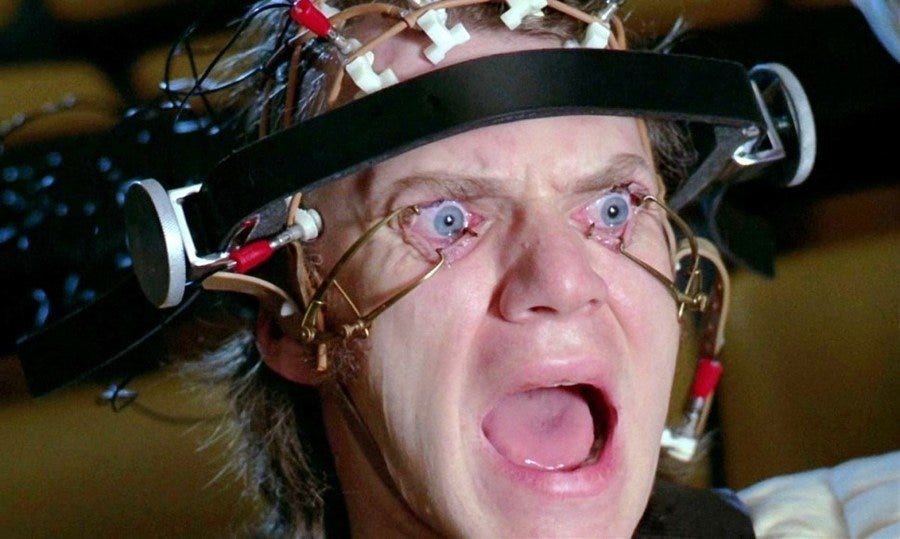
The left hemisphere ego is the headset through which the simulation is experienced, and the right hemisphere Self is the actual player, who always remembers that she’s playing a game, and is not confined by that game. The right hemisphere Self has does not take the game seriously, finding the entire game to be very fun.
The right hemisphere Self is more like the in-game guidance system, or a cheat code you forgot to turn on. It already knows the map and the whole game. It is not rushing. It is not worried. It has seen this level before, many times.
The right hemisphere Self does not think in terms of “what do I do next” or “I might die.” It moves more like “ah yes, here comes that part,” as if remembering a movie, a movie that it has seen before many times. Its intelligence is atemporal, nonlocal, which is to say not confined by linear spacetime, and unlike the left hemisphere, always amused, always entertained, and always enjoying the game.
When you forget that you’re just playing a game, you play like a beginner, running into walls, panicking at every boss fight, gripping the controller like your life depends on it. When you start listening to the player behind the headset, you relax. You remember you’re just playing a game. You still jump, run, and fight, but with an enchanting sense that the player and the game are not separate.
Nothing external has really changed, but suddenly you start finding shortcuts. Doors open at the right time. You arrive just as things line up. You seem to just get luckier and luckier. You just keep winning, level after level when you realize all of the bosses you have to defeat in the game were in fact created for you to easily defeat.

You are still playing the game, of course. You just are not taking it quite so personally. Even the “negative” experiences in the game, like painful experiences and emotions, become strangely pleasurable.
And that, oddly enough, is when you start playing very well, and when the game becomes deeply pleasurable, in a way the left hemisphere ego could never have imagined.
Stay tuned, in the next episode, Chapter One, I’ll provide evidence that supports the Headset Theory, as well as simple practical methods to start the process of remembering that part of yourself that is always enjoying the game.
That is exactly the feeling of the right hemisphere. Well said.
So good! Looking forward to the next chapter!